
The Big Five — lion, leopard, elephant, buffalo and rhinoceros — are Tanzania's most sought-after wildlife. Here's where to find each one and what to know before you go.
The term 'Big Five' originated with colonial hunters who designated the five most difficult — and dangerous — animals to hunt on foot: lion, leopard, African elephant, African buffalo, and rhinoceros. Today the Big Five are the centrepiece of every East Africa safari wish list — not because they are the five largest animals, but because they are five of the most impressive, most sought-after, and most thrilling to encounter in the wild. Tanzania is one of the best places on Earth to see all five.
Lion — Tanzania's Pride
Tanzania holds the largest lion population of any country in Africa — an estimated 8,000–10,000 individuals, representing roughly 40% of the continent's remaining wild lions. The Serengeti-Ngorongoro ecosystem is the single most important lion habitat in the world. Here, lions live in large prides and are exposed enough to vehicles that you can observe natural behaviour at close range: morning hunts at dawn, midday family gatherings under acacia trees, the dramatic interactions between rival males.
The Serengeti's central corridor around Seronera is famous for lion sightings — the resident prides in this area are so habituated to vehicles that they will walk within metres of your 4x4 without concern. But lion density is high across the entire Serengeti, in Ngorongoro Crater, in Tarangire, and in Ruaha, which holds one of Tanzania's strongest lion populations outside the northern circuit.
Leopard — The Elusive One
Leopards are present across Tanzania but are solitary, nocturnal, and masters of concealment. In the Serengeti, the best leopard viewing is in the rocky outcrops and riverine forest of the Seronera Valley, where individual leopards have been studied for decades and are relatively habituated to vehicles. Leopards rest in trees during the day — look for the distinctive tail hanging over a horizontal branch. Your guide's knowledge of individual animals' territories makes the difference between finding a leopard and not.
Tarangire National Park is underrated for leopard. The combination of riverine forest, rocky hills, and dense bush along the Tarangire River creates ideal leopard habitat, and sightings are reliable if you spend enough time in the right areas. Lake Manyara also has a small population of tree-climbing lions — a famous local phenomenon where lions rest on branches — and leopards are present in the forest sections.
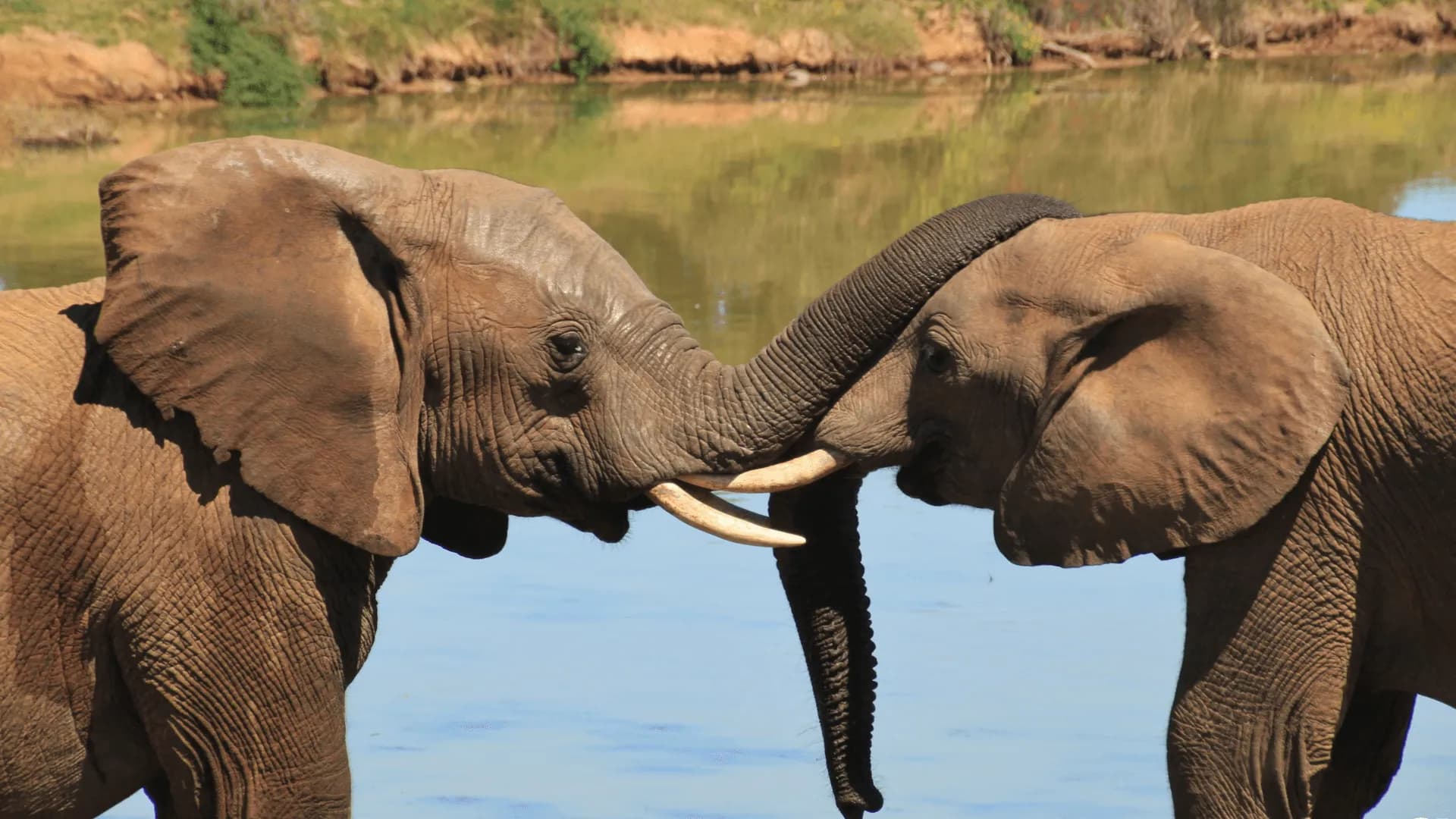
African Elephant — Tanzania's Giants
Tanzania hosts one of the largest elephant populations in Africa — approximately 60,000 individuals — and the elephants of Tarangire are famous for their size and their tusks. Tarangire National Park has the highest elephant density of any park in East Africa, and during the dry season (June–October), hundreds of elephants gather along the Tarangire River in concentrations that must be seen to be believed.
The elephants of Amboseli in Kenya and Ruaha in Tanzania are also famous for producing large-tusked bulls. In the Serengeti, elephant sightings are reliable in the river areas and in the northern section near the Mara River. Ngorongoro Crater has a resident elephant population that includes some of the most ancient and impressive bulls in Africa. Nyerere National Park (formerly Selous) in southern Tanzania has the largest elephant population of any protected area in Africa.
African Buffalo — Underestimated and Magnificent
The African buffalo is arguably the most underappreciated of the Big Five. Often dismissed in favour of the more glamorous lion and leopard, buffalo are actually fascinating: massively social (herds of thousands are common in the Serengeti), physically formidable (an adult bull weighs up to 900 kg), and behaviourally complex. Old bulls that leave the herd — known as 'dagga boys' — are notoriously cantankerous and considered the most dangerous of all the Big Five to approach on foot.
Buffalo are present in high numbers across Tanzania. The Serengeti has enormous herds — sometimes thousands strong — particularly in the northern and western sections. Ngorongoro Crater has a significant resident population. Tarangire, Lake Manyara, and Ruaha all offer excellent buffalo viewing. Unlike some of the more elusive Big Five, buffalo sightings are almost guaranteed on any Tanzania safari.
Rhinoceros — The Conservation Priority
Rhinoceros are the most difficult of the Big Five to see in Tanzania — and in Africa as a whole. The black rhinoceros was devastated by poaching in the 1970s–1980s, and while populations are recovering, they remain critically endangered with fewer than 6,000 individuals surviving in the wild across the continent.
Ngorongoro Crater is the best place in Tanzania to see black rhino, with approximately 25 individuals living on the crater floor. This sounds like a small number — and it is — but the crater's enclosed geography and excellent ranger protection make it one of the most reliable rhino-viewing spots in Africa. Sightings are not guaranteed, but a full day in the crater gives you a good chance. The Serengeti also has a small rhino population in the Moru Kopjes area, though sightings are less predictable.
Rhino Viewing Tip
For Ngorongoro rhino viewing, arrive at the crater floor at opening time and head directly to the Ngoitokitok Springs area on the eastern crater floor — this is the most reliable rhino territory. Your guide should know the regular ranging areas of individual animals.
Best Parks for All Five
| Animal | Best Park | Second Best | Notes |
|---|---|---|---|
| Lion | Serengeti | Ngorongoro Crater | Very reliable in Seronera Valley |
| Leopard | Serengeti (Seronera) | Tarangire | Nocturnal — dawn and dusk best |
| Elephant | Tarangire | Serengeti | Dry season concentration is extraordinary |
| Buffalo | Serengeti | Ngorongoro Crater | Enormous herds in northern Serengeti |
| Rhino | Ngorongoro Crater | Serengeti (Moru Kopjes) | Only ~25 on crater floor; patience required |
Beyond the Big Five
Tanzania's wildlife extends far beyond the Big Five. The country has the highest cheetah population in East Africa, wild dogs (one of Africa's most endangered carnivores, best seen in Ruaha and Nyerere), massive crocodiles and hippos in every river, and a birdlife of over 1,100 species. The concept of the Big Five is useful for planning but risks narrowing your vision — some of the most thrilling wildlife encounters in Tanzania involve animals not on the original hunting list.
Seeing all Big Five on a single Tanzania safari is more achievable than people think. A seven-day Northern Circuit combining Tarangire, the Serengeti, and Ngorongoro Crater covers the prime habitats for all five species. With a knowledgeable guide and good fortune with the rhino — the wild card — a Big Five safari in Tanzania is absolutely attainable.
Based in Arusha, Tanzania
Ready to Experience It First-Hand?
Our expert team creates custom itineraries for every budget and timeframe. Get your personalised quote within 24 hours.