
Zanzibar is more than a beach resort. It is a living archive of Swahili culture, Arab trading history, and one of the world's most extraordinary island ecosystems.
Zanzibar is a name that carries weight. It has been a spice island, a slave trading hub, an Arab sultanate, a British protectorate, and one of the most distinctive cultural melting pots in the Indian Ocean. Today, most visitors know it as a beach destination — and the beaches are extraordinary — but reducing Zanzibar to white sand and turquoise water is like visiting Istanbul for its weather. There is far more to experience here than the resorts alone reveal.
Stone Town: The Heart of Zanzibar
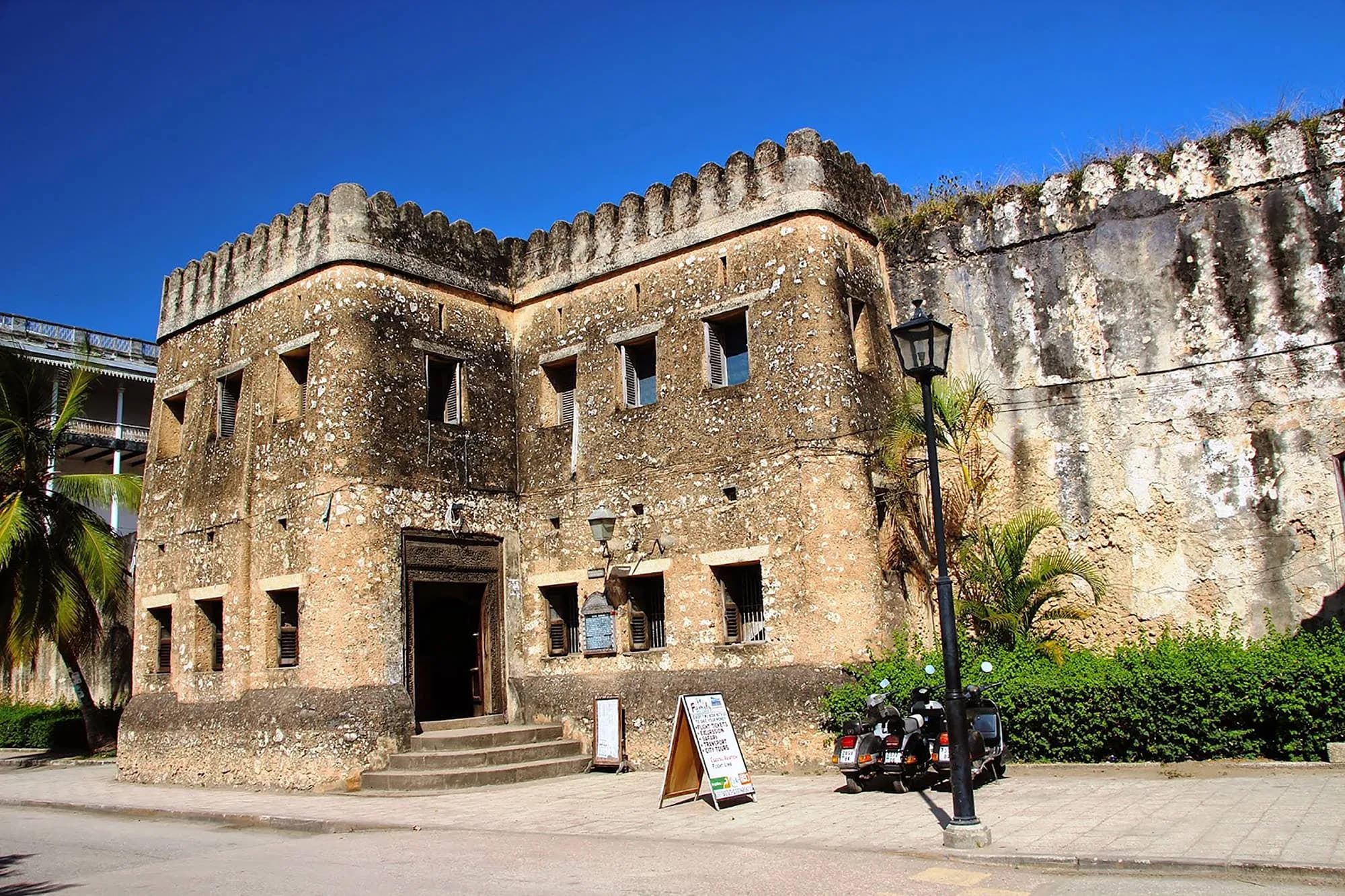
Stone Town is the old quarter of Zanzibar City — a UNESCO World Heritage Site and one of the most architecturally and culturally dense urban environments in East Africa. The town grew from an Arab trading settlement in the nineteenth century, when Zanzibar was the central hub of the Indian Ocean spice and slave trade. The Sultan of Oman moved his court here in 1840, and the architecture that followed — Persian courtyard houses, Arab townhouses with overhanging balconies, coral stone merchant buildings — still defines the streetscape today.
Wandering Stone Town without a map is the correct approach. The narrow lanes, too small for vehicles, open unexpectedly onto spice markets, courtyard cafes, mosque minarets, and the occasional ruins of a former slave auction. Every carved wooden door you pass tells a story: the larger and more elaborate the door, the wealthier and more socially powerful the family who commissioned it. Doors with brass spikes facing outward are a Zanzibari adaptation of an Indian tradition, originally intended to prevent war elephants from ramming them — adopted here as pure status symbol.
The Spice Farm Experience
Zanzibar earned its historical name as the Spice Island from the clove plantations introduced by Arab traders in the early nineteenth century. At its peak, Zanzibar supplied the majority of the world's cloves. Today, the plantations cover parts of the island's interior, and a spice farm tour — though a well-worn tourist activity — remains one of the most sensory experiences available on the island.
A good spice tour takes you through a working farm where a guide leads you to living plants and explains what you are looking at: the clove tree's dark green leaves with small flower buds that dry to the familiar dried clove; the vanilla orchid climbing up a support pole; the cinnamon tree whose bark peels off in aromatic strips; the black pepper vine threading through the canopy. Everything you smell and taste here connects directly to a global trading history stretching back centuries.
Prison Island and the Giant Tortoises
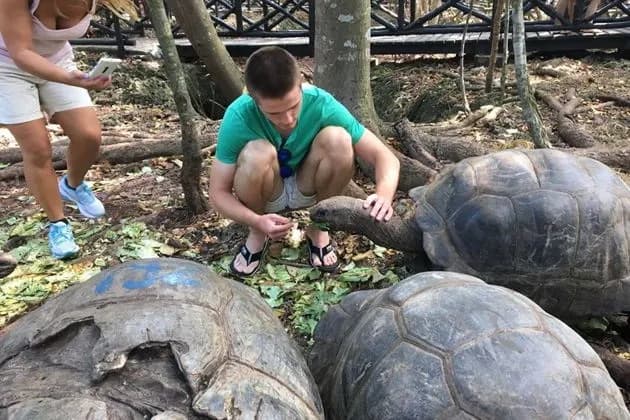
A short boat ride from Stone Town, Prison Island (Changuu Island) was built by the British in 1893 as a quarantine facility and later used as a detention centre. Today it is famous for its colony of Aldabra giant tortoises, gifted to the island from the Seychelles in 1919. Some of these individuals are over 100 years old — massive, slow-moving creatures that allow visitors to approach them, feed them grass, and pose for photographs in a way that would be impossible anywhere less managed.
Jozani Forest and the Red Colobus Monkey
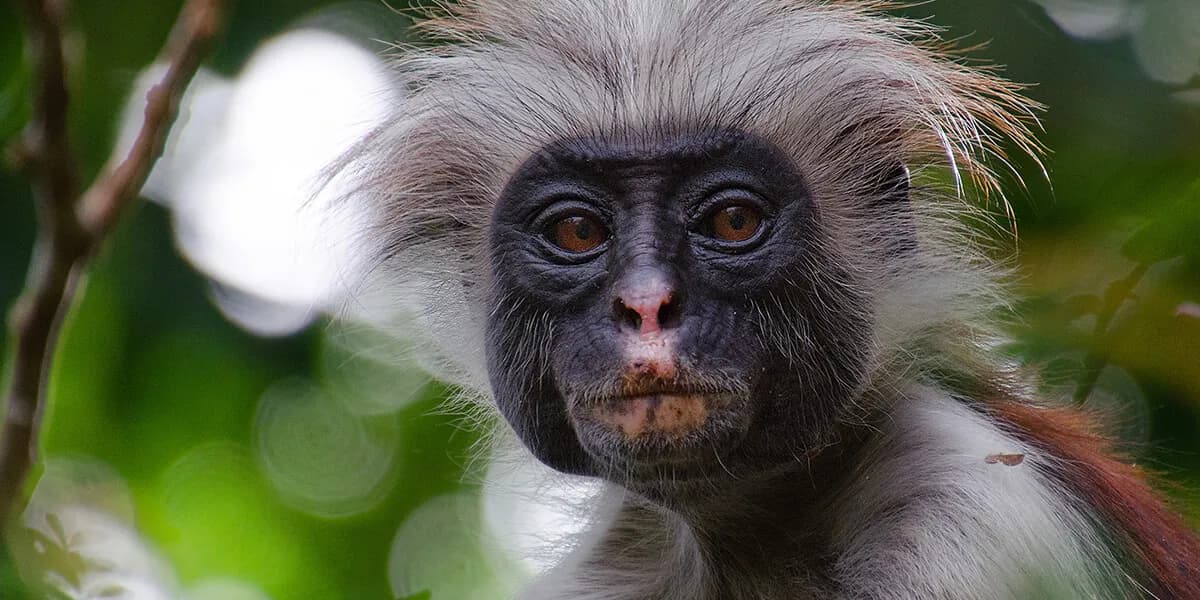
Jozani Chwaka Bay National Park protects a remnant patch of groundwater forest in the island's interior — and the last significant population of the Zanzibar red colobus monkey, one of the world's rarest primates. These copper-and-black monkeys are endemic to Zanzibar and found nowhere else on earth. Habituated groups move through the forest canopy directly above the elevated walkway, giving excellent, close views with no effort required.
The Beaches
After all the culture and history, the beaches of Zanzibar genuinely deliver. The Indian Ocean water is warm year-round, the sand is fine white coral, and the reef systems — particularly around Mnemba Atoll in the northeast and Chumbe Island Coral Park in the southwest — offer some of the most accessible snorkelling in Africa. Nungwi in the north and Kendwa just south of it have the best swimming at all tides (most of the east coast beaches go very shallow at low tide). Paje on the southeast coast is the kitesurfing capital of the Indian Ocean.
- ›Best beaches for swimming: Nungwi and Kendwa (north coast)
- ›Best for kitesurfing: Paje and Jambiani (southeast coast)
- ›Best for snorkelling: Mnemba Atoll (northeast)
- ›Best for history: Kizimkazi (south) — dolphin swimming and ancient mosque
- ›Most developed with most restaurants: Nungwi
The beaches and the culture together — not separately — are what make Zanzibar exceptional. A day in Stone Town followed by three days on the beach gives you two completely different Zanzibars. Both are worth having.
Based in Arusha, Tanzania
Ready to Experience It First-Hand?
Our expert team creates custom itineraries for every budget and timeframe. Get your personalised quote within 24 hours.