
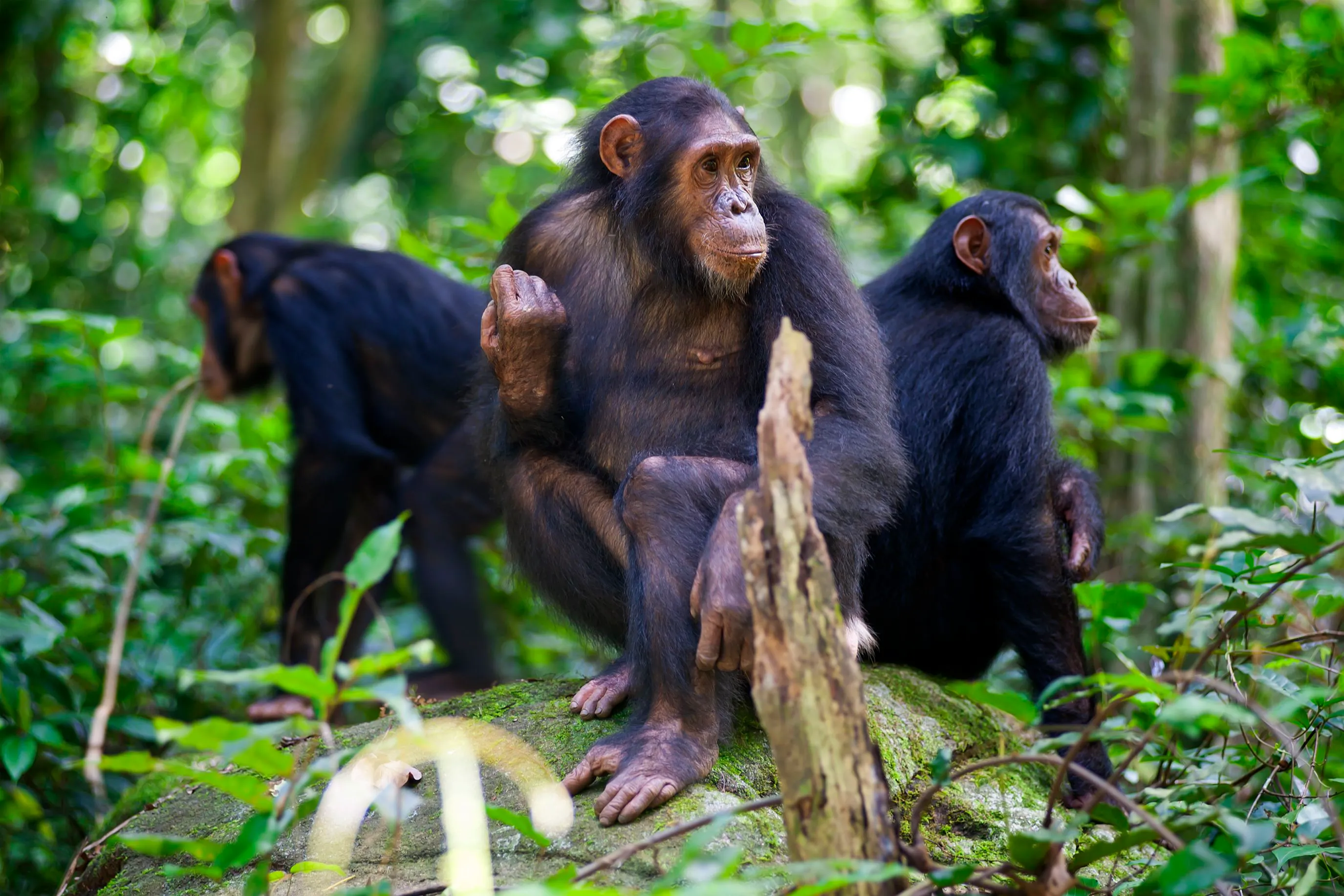
Tanzania is home to two of the world's greatest chimpanzee trekking destinations — Gombe Stream, where Jane Goodall made history, and the remote Mahale Mountains. Here's how to visit both.
Tanzania's western parks — Gombe Stream and Mahale Mountains — offer the finest chimpanzee trekking in the world. These are the sites where Jane Goodall's landmark research into chimpanzee intelligence and social behaviour began in 1960, research that fundamentally changed our understanding of what it means to be human. Today, trekking to find habituated chimpanzee communities in the forest is one of the most emotionally profound wildlife encounters in Africa — and one of the most overlooked, sitting far outside the tourist mainstream.
Gombe Stream National Park
Gombe is Tanzania's smallest national park — just 52 square kilometres of steep forest along the eastern shore of Lake Tanganyika. It is also its most historically significant for wildlife research. Jane Goodall arrived here in 1960, and the research station she established continues to monitor the chimpanzee communities decades later. The Kasakela chimpanzee community, the most studied wild chimpanzee group in the world, lives in the forest above the research station and can be tracked daily by trekkers.
Gombe's chimpanzees are the most habituated in Africa — a direct result of six decades of continuous human presence from the research team. This means closer, calmer encounters than almost anywhere else. Chimpanzees may walk within two to three metres of your trekking group, sit in trees directly above you, and display natural social behaviours — grooming, foraging, male dominance displays — without significant disturbance from the human presence.
Mahale Mountains National Park
Mahale is everything Gombe is not: remote, vast (1,613 square kilometres), dramatically beautiful, and almost entirely free of other tourists. The Mahale Mountains rise steeply from the shore of Lake Tanganyika — the world's second deepest lake — and the forest climbing those slopes is home to approximately 1,000 chimpanzees. The M group, the most habituated community, is tracked daily from a small number of exclusive camps on the lakeshore.
Getting to Mahale is part of the adventure. There is no road access — you reach the park either by charter flight to the Mahale airstrip or by boat from Kigoma (a 6–8 hour journey by motorboat). This inaccessibility keeps visitor numbers very low: on any given day, fewer than 20 people are trekking in Mahale. The chimpanzee encounters feel genuinely remote and untrammelled in a way that Gombe, with its research station proximity, cannot quite replicate.
The Trekking Experience
Both Gombe and Mahale trekking follows the same pattern. Guides with daily knowledge of the chimpanzee community's location lead trekkers into the forest at dawn. Trackers who followed the chimpanzees the previous evening know their nesting location — the starting point for the morning's search. The forest trek can take anywhere from thirty minutes to four hours depending on where the chimpanzees have moved overnight.
When the chimpanzee community is located, your guide positions the group at a respectful distance. You spend one hour with the group — the same protection rule as gorilla trekking. The experience of being with wild chimpanzees is fundamentally different from gorillas: chimps are louder, faster, more manic, and more actively curious. Where a gorilla encounter is often deeply quiet and contemplative, a chimpanzee encounter is energetic and sometimes overwhelming.
Health Protocols
Chimpanzees share approximately 98.7% of human DNA and are highly susceptible to human respiratory viruses. Both Gombe and Mahale enforce strict health rules: anyone with cold or flu symptoms is excluded from trekking. Wear a face mask when within 10 metres of the chimpanzees. Minimum age for trekking is 15 years.
Gombe vs Mahale: Which to Choose?
| Factor | Gombe | Mahale |
|---|---|---|
| Access | Speedboat from Kigoma (1–2 hrs) | Charter flight or long boat from Kigoma |
| Size | Very small (52 km²) | Large (1,613 km²) |
| Habituated Groups | Kasakela community | M group (and others) |
| Daily Visitors | Up to 20 | Fewer than 15 |
| Cost | More affordable | More expensive (remote camps) |
| Beach/Lake | Good swimming at Gombe beach | Exceptional — pristine lake shore |
| Other Wildlife | Olive baboons, red colobus | Red colobus, other forest species |
| Accommodation | Basic to mid-range only | Mid-range to luxury lake camps |
How to Add Western Parks to Your Tanzania Itinerary
Gombe and Mahale are not easily combined with the Northern Circuit in a single itinerary — the logistics require flying to Kigoma (from Dar es Salaam or Arusha) and then accessing the parks by boat. Most visitors choose between the northern circuit (Serengeti, Ngorongoro, Tarangire) or the western parks, not both. A dedicated western parks itinerary of five to seven days — Gombe plus Mahale plus Kigoma's historic railway town — is a deeply rewarding alternative safari experience for those who have already done the Northern Circuit.
Standing in the forest while a wild chimpanzee family passes through the trees above you — pausing, watching, continuing on — is not simply a wildlife encounter. It is a confrontation with the thin boundary between species. Jane Goodall understood this in 1960. Visitors who make the journey to Gombe or Mahale understand it now. This is Tanzania's most underrated experience.
Based in Arusha, Tanzania
Ready to Experience It First-Hand?
Our expert team creates custom itineraries for every budget and timeframe. Get your personalised quote within 24 hours.